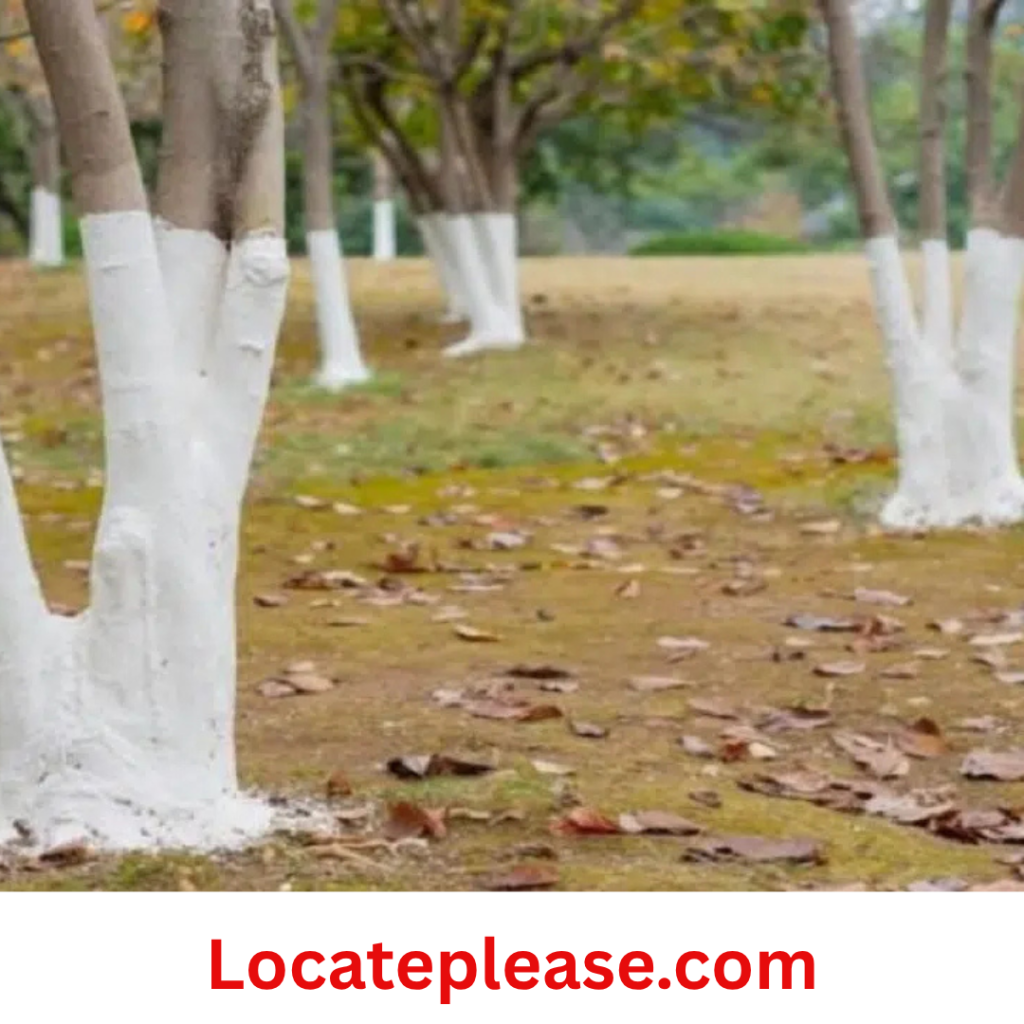
For years, I’d pass them on country roads and in orchards—trees standing tall in winter’s bareness, their trunks wrapped in a soft band of white, like they’d been dipped in fresh snow.
I’d wonder: What does it mean? Is it a warning? A marker? A message meant only for those who know how to read it?
Turns out, it’s none of those things.
It’s something far more tender.
It’s care.
Not a Code—A Comfort
You may have seen other painted marks on trees—orange for removal, purple for “private property.” Those are signals—practical, administrative.
But white?
White is different.
White is not for humans.
It’s for the tree.
In winter, when the sun hangs low and bright against a pale sky, something quiet and dangerous can happen: sunscald.
Here’s how it unfolds:
During the day, the sun’s rays warm the dark bark, causing it to expand—just slightly, just enough.
Then night falls. The temperature plummets.
The bark cools—too quickly. It contracts.
And in that sudden shift, it can split. Crack. Peel away.
These wounds may seem small, but they’re invitations—to pests, to disease, to decay.
A tree, in its stillness, is fighting to hold itself together.
The White Coat: Nature’s Gentle Armor
So we offer help.
A coat of diluted white latex paint—nothing fancy, nothing chemical—painted up the trunk, from the base to just below the lowest branches.
Why white?
Because light reflects.
Because white doesn’t absorb the sun’s heat like dark bark does.
Because it softens the swing—from day’s warmth to night’s chill—giving the tree time to adjust, not shatter.
Think of it as sunscreen.
As a blanket.
As a quiet promise: I see you. I’ll help you through this.
It’s not decoration. It’s devotion.
Continued on the next page
For Complete Cooking STEPS Please Head On Over To Next Page Or Open button (>) and don’t forget to SHARE with your Facebook friends.